You landed a new customer last month. They paid, they were happy, and then they vanished. No second visit, no repeat order, nothing. For most local businesses, that’s the real leak. Not a shortage of new leads, but a failure to bring the good ones back. Email marketing is the cheapest, most reliable way to fix it. It returns $36 to $42 for every $1 spent, more than any other channel, and it’s the one tool built specifically for turning a one-time customer into a regular.
Why does email marketing work so well for local businesses?
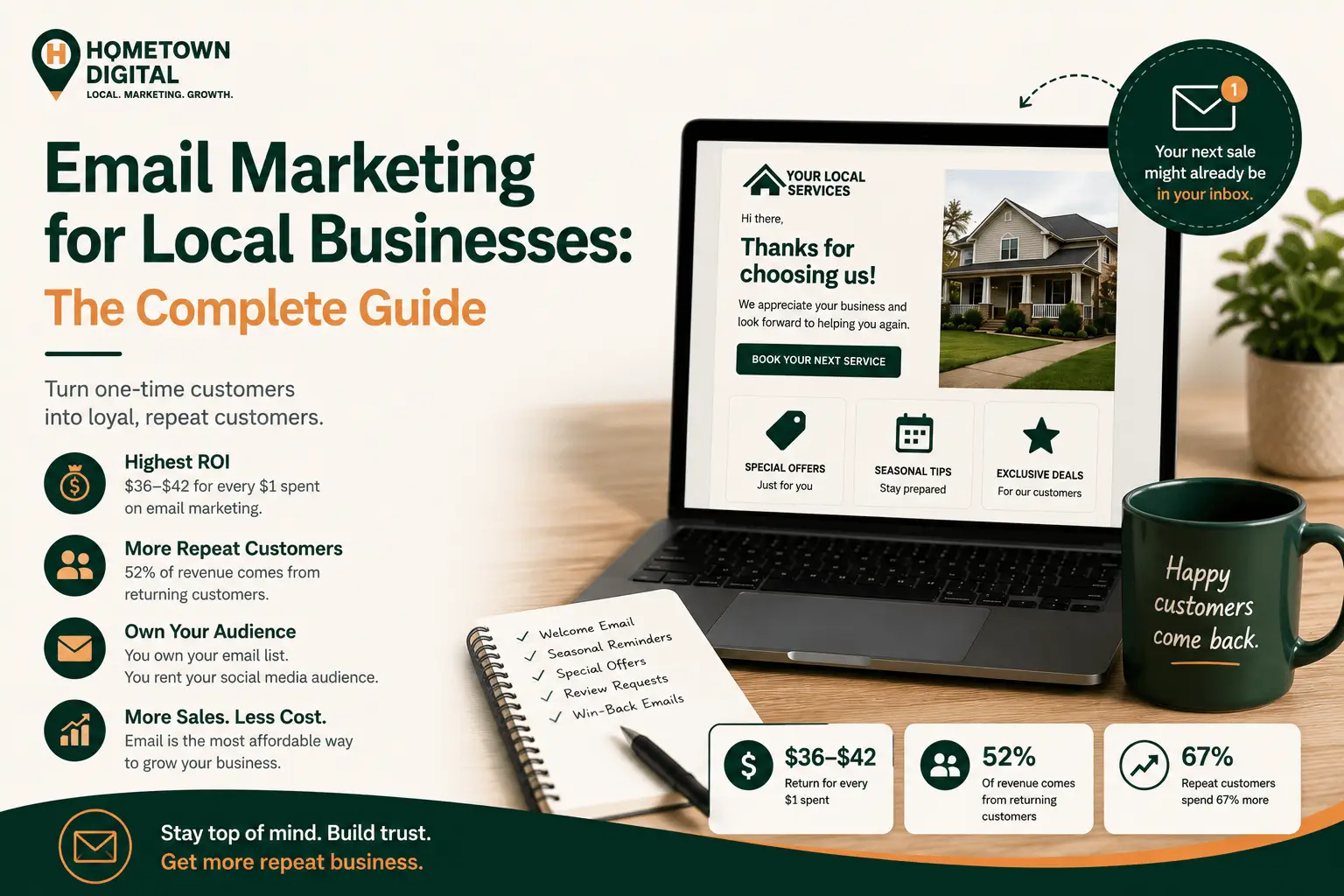
Email marketing works for local businesses because it reaches people who already know you, at a cost almost nothing else can match. It returns $36 to $42 for every dollar spent, according to 2026 data compiled by Litmus and Digital Applied. Paid search returns about $2. Social ads return $2.80. Nothing else comes close.
That gap isn’t an accident. When you run a Google ad or boost a Facebook post, you’re paying to reach strangers, most of whom will never call you. When you send an email, you’re talking to people who already walked through your door, booked a job, or handed you their address on purpose. They know your name. They’ve paid you before. And that’s exactly the audience most likely to buy again.
Here’s the part most owners miss. The average local business earns 52% of its revenue from returning customers, according to BIA Advisory Services, and repeat customers tend to spend about 67% more than first-time buyers. So the customers you already have aren’t just easier to reach. They’re worth more. Email is the only affordable channel designed to keep them coming back.
Isn’t social media enough? What makes email different?
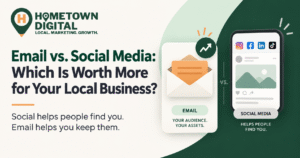
Social media and email do two different jobs. Social media is good at getting discovered by new people. Email is good at keeping the people you’ve already reached. The difference that matters most is ownership. You own your email list. You only rent your social media audience.
When you post on Facebook or Instagram, the platform decides who sees it. Organic reach for most business pages now sits somewhere between 2% and 10% of your followers. So if you have 1,000 followers, maybe 50 to 100 ever see a given post. Email lands in the inbox of everyone who opted in, with no algorithm in the middle deciding you’re not worth showing.
That doesn’t mean social media is useless. Far from it. It’s one of the best ways to get in front of people who’ve never heard of you, which is why we run Meta Ads for local businesses for plenty of clients. But social and email aren’t competitors. Social gets people’s attention. Email turns that attention into repeat business. The smartest local businesses use both, and use each for what it’s actually good at.
| Email marketing | Organic social media | |
| Who owns the audience | You do | The platform does |
| Who sees your message | Everyone who opted in | Roughly 2 to 10% of followers |
| Best at | Repeat business and retention | Discovery and awareness |
| Average return | $36 to $42 per $1 | Varies; organic reach shrinking |
| Survives platform changes | Yes | No |
How do you build an email list for a local business?
You build a local business email list by collecting addresses at every point where a customer already interacts with you: at checkout, after a completed job, on your website, and through your review requests. The goal is simple. Turn every real-world touchpoint into a chance to stay in contact.
You don’t need thousands of subscribers to make email pay off. You need the right ones, the people who’ve actually done business with you. Here’s where local businesses collect the most addresses:
- At the point of sale or service. Ask for an email when someone checks out, books an appointment, or signs off on a finished job. This is your highest-quality source, because these people are already customers.
- On your website. A simple signup form, offering something useful like a seasonal reminder or a first-time discount, captures visitors who aren’t ready to buy yet. If your site doesn’t have one, that’s usually the first thing we add when we build or rework a local business website.
- Through review and follow-up requests. When you email a customer to ask for a review, you’ve confirmed a working address and an engaged customer at the same time.
- In person, on paper. A clipboard at the counter or a line on your invoice still works. Not everything has to be digital.
One rule matters more than any tactic: only email people who agreed to hear from you. Buying a list or scraping addresses doesn’t just annoy people. It wrecks your deliverability and can land you in legal trouble under laws like CAN-SPAM. Permission is the whole game.
What kinds of emails should a local business actually send?
Most local businesses only need a handful of email types to see results: a welcome message, occasional promotions, seasonal reminders, review requests, and a win-back email for customers who’ve gone quiet. You don’t need a daily newsletter. You need the right message at the right moment.
The highest-return emails usually aren’t the ones you write by hand each week. They’re automated. They send themselves when a customer takes an action. According to Omnisend, automated emails drive about 37% of all email revenue while making up just 2% of the emails sent. That’s a huge return for something you set up once.
Here’s what that looks like for a local business:
- Welcome email. Goes out the moment someone joins your list. It’s the most-opened email you’ll ever send, so use it to set expectations and give a reason to come back.
- Seasonal reminders. An HVAC company emailing before the first heat wave. A landscaper reaching out at spring cleanup. A tree service checking in after a storm. These land because the timing is right.
- Promotions and slow-season offers. A quiet week is a good week to fill with an email to past customers.
- Review requests. After a finished job, a short ask for a review does double duty, building your reputation while keeping you top of mind. If reviews are a weak spot, our guide to reputation management walks through the whole system.
- Win-back emails. For the customer who hasn’t been back in six months or a year. Sometimes all it takes is a reminder that you exist.
Notice what’s missing? Anything spammy. You’re not trying to email people every day. You’re staying useful and present, so that when they need you again, you’re the first name they think of.
How often should you email your customers?
For most local businesses, one to four emails a month is plenty. The right number depends on how often people actually buy from you. A restaurant can email weekly. A roofer selling a once-a-decade job should email far less. When in doubt, send less, but make each one worth opening.
Frequency is where a lot of owners get nervous. They worry about annoying people or getting marked as spam. That’s a fair concern, but the fix isn’t to go silent. It’s to stay relevant. A landscaper who emails a helpful seasonal tip once a month won’t wear out their welcome. A business that blasts a hard sell every three days will.
The honest truth? Under-emailing is the more common mistake we see. Owners collect addresses, then never use them, and the list goes cold. An address you never email is worth nothing. Send consistently, send something useful, and pay attention to who opens and who doesn’t.
What does email marketing look like for a real local business?
Picture a plumbing company with 800 past customers and no email program. They rely entirely on new leads, paying for every single one. By collecting emails after each job and sending a few simple messages a year, they turn that customer list into a source of repeat work that costs almost nothing.
This is a composite, not a specific client, but it mirrors what we see across the trades. Start with the list they already have, 800 people who’ve paid them before. Set up a welcome email and a review request that send automatically. Twice a year, send a seasonal reminder: check the water heater before winter, schedule a drain cleaning before the holidays.
Now run the math the way an owner would. Acquiring a brand-new customer costs about 5 times more than keeping an existing one, and a 5% bump in retention can lift profits anywhere from 25% to 95%, according to research from Bain & Company. So even a modest email program that brings back a handful of past customers each month pays for itself many times over. No new ad spend. No bidding against competitors. Just staying in touch with people who already trust you.
That’s why 41% of small business owners expect email to be their most valuable marketing channel in 2026, according to a Constant Contact survey of more than 1,500 owners. They’ve done the math too.
Common Questions About Email Marketing for Local Businesses
How much does email marketing cost for a small business?
Most local businesses spend between $20 and $100 a month on email software, depending on list size, and many platforms are free under a few hundred subscribers. Given that email returns $36 to $42 for every dollar spent, it’s one of the most affordable marketing channels a local business can run.
Do I need a big email list for it to be worth it?
No. A small list of real customers beats a big list of strangers every time. Even a few hundred past customers can drive meaningful repeat business, because these are people who already know and trust you. The quality of the list matters far more than the size.
Is email marketing better than social media for local businesses?
For repeat business, yes. Email reaches everyone who opted in, while organic social media reaches only about 2 to 10% of your followers. Social media is better for getting discovered by new people. The strongest approach uses social to attract attention and email to turn that attention into repeat customers.
What should I put in my first email?
A welcome message. Thank the person for joining, tell them what kind of emails to expect and how often, and give them one reason to come back, like a discount or a helpful tip. Welcome emails get opened more than any other type, so make it count.
How do I keep my emails out of the spam folder?
Only email people who opted in, use a real business email address, and avoid spammy subject lines full of caps and exclamation points. Keeping a clean list of engaged subscribers matters more than any single trick. When people open and click your emails, inbox providers keep delivering them.
How often should I email my customers?
One to four times a month works for most local businesses. Match the frequency to how often people buy from you. A restaurant can email weekly, while a contractor selling infrequent, high-ticket jobs should email less. Consistency matters more than volume.
Ready to turn one-time customers into regulars?
Email marketing is one of the highest-return, lowest-cost things a local business can do, and most owners are sitting on a customer list they’ve never used. At Hometown Digital, we help local businesses build and run email marketing programs that actually bring people back, alongside the website, SEO, and advertising work that gets them found in the first place.
If you want a full picture of where your marketing stands, start with a free website audit. It’s the fastest way to find out what’s working and what’s quietly costing you customers.