You’ve been burned before, or you’ve watched another local business owner get burned. An agency promised the moon, locked them into a year-long contract, sent a monthly report nobody could read, and the phone rang no more than it did before. So here’s the short version, up front: choosing a marketing agency comes down to finding a team that understands local business, prices its work openly, reports on real results like calls and booked jobs instead of vanity metrics, and earns your trust before asking for a long commitment.
We’re an agency ourselves, so take this for what it’s worth. But we’ve also spent years in the trades and on the other side of the table, and the rest of this guide breaks down how to tell the good ones from the rest, the red flags to walk away from, and the exact questions to ask before you sign anything.
Do you actually need a marketing agency?
Not every local business needs an agency. If you have the time and the interest to run your own Google Business Profile, ask customers for reviews, and post consistently, you can get surprisingly far on your own. An agency earns its fee when you’re out of time, out of your depth, or leaving money on the table, and you’d rather run your business than learn digital marketing on nights and weekends.
The trouble is, most owners land in that second group. Research from Constant Contact found that 73% of small businesses aren’t confident their current marketing strategy is actually working. That’s not a knock on owners. It’s that the rules keep changing, and running a plumbing company or a salon is already a full-time job.
Before you hire anyone, do the free basics yourself so you know what you’re paying an agency to improve. Our small business marketing checklist walks through what to lock down first, and if money is tight, getting more customers without a big marketing budget is more doable than most owners think. If you’ve covered the basics and you’re still stuck, or you just don’t want this on your plate, that’s when bringing in help makes sense.
What should a local business look for in a marketing agency?
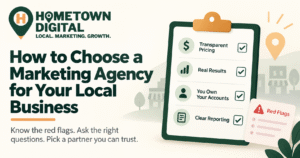
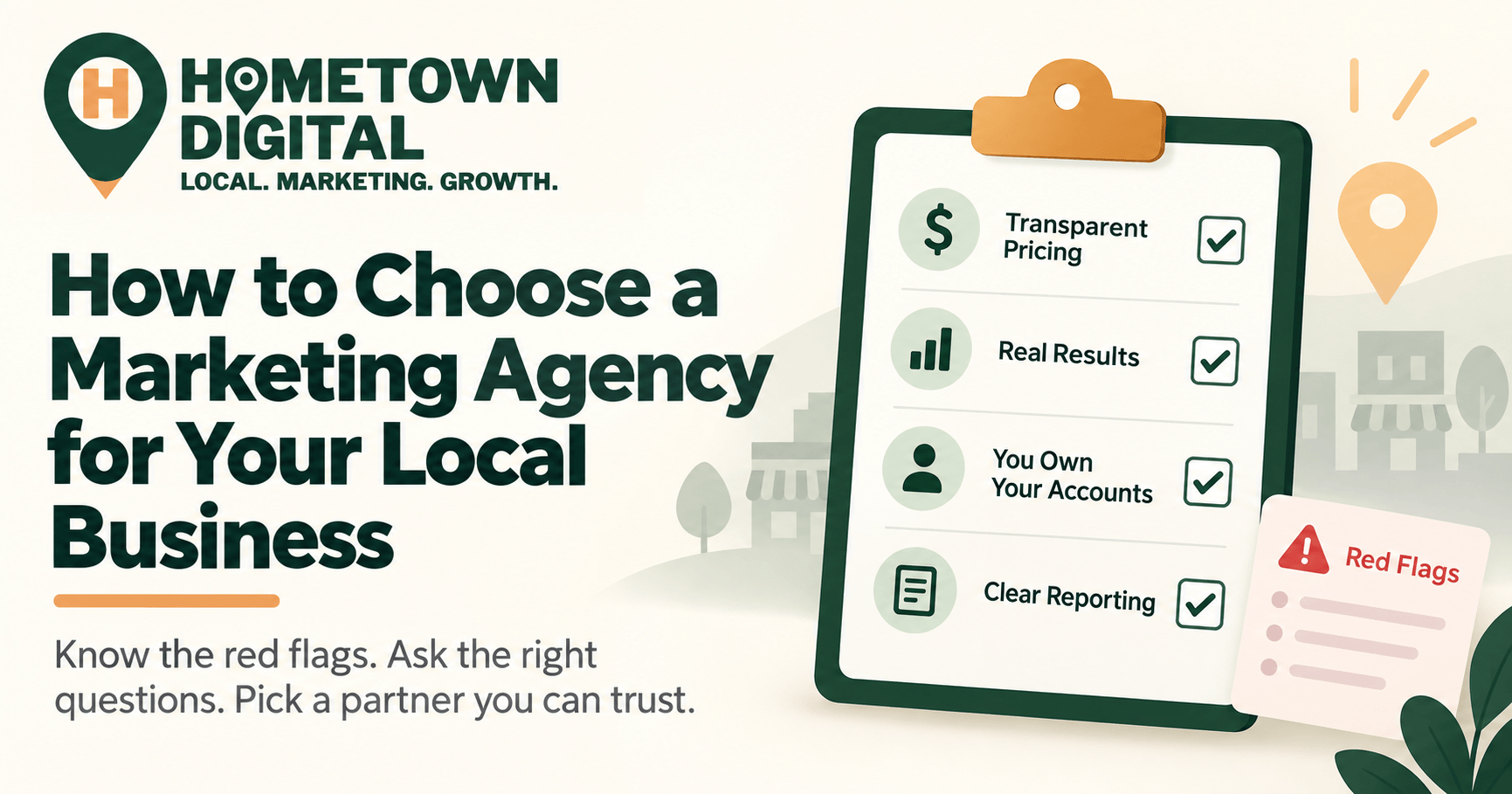
Look for an agency that knows local business specifically, covers the channels you actually need under one roof, prices its work openly, and measures success in calls and booked jobs. The best fit is a team that can explain what they’ll do in plain English and show you exactly how they’ll prove it’s working.
Here’s what separates a real partner from a vendor:
- They understand your kind of business. An agency that mostly serves software startups will not instinctively get why an HVAC company lives or dies by the Google Maps pack during the first heat wave. We’ve been in the field ourselves, so we notice things a generalist misses.
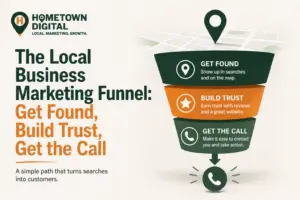
- They cover the whole picture. The channels aren’t separate. They work together as a local marketing funnel: search and reviews get you found, your website builds trust, ads fill the slow weeks. An agency juggling one channel in isolation tends to leave gaps.
- They show pricing before the sales call. Most agencies hide their rates behind a custom quote. The good ones let you see what things cost up front, because they have nothing to hide.
- They report on outcomes, not activity. Ask what the monthly report shows. If it’s all impressions and reach with no mention of calls, form fills, or booked jobs, that’s a problem waiting to happen.
- They can point to proof. A portfolio, real reviews, and a current client who’ll take your call all count for more than a slick pitch deck.
And remember this is a relationship, not a one-time purchase. The agency partnerships that work tend to last years. A 2026 analysis from Focus Digital put the average retainer client relationship at about 56 months, more than four and a half years. You’re not buying a logo. You’re picking a long-term partner, so vet accordingly.
What are the red flags to watch for?
The biggest red flags are guaranteed rankings, long lock-in contracts before any results, refusing to show pricing, vague reporting, and not letting you own your own accounts. Any one of these should make you slow down. Two or more, and you should probably keep looking.
- They guarantee a number-one Google ranking. Nobody controls Google’s results, so nobody can promise the top spot. A guarantee like this is a sign they’ll say anything to close you.
- They lock you into a long contract up front. A confident agency lets the work earn the renewal. Long commitments before they’ve proven anything protect the agency, not you.
- They won’t show pricing until a sales call. If a firm treats its own rates like a state secret, ask yourself how transparent it’ll be about your results.
- The reporting is all vanity metrics. This is the big one. Setup’s Marketing Relationship Survey found the top reason clients fire their agency in 2025 wasn’t price, it was dissatisfaction with the actual delivery, cited by 48% of departing clients. Price ranked seventh. What goes wrong is usually the work, not the invoice, so vet for delivery, not just cost.
- You don’t own your website, domain, or ad accounts. If everything is built inside the agency’s accounts, leaving means starting over. You should own your assets from day one.
- Every answer comes back in jargon. If they can’t explain what they’ll do in words you understand, that’s not a sign of sophistication. It’s usually a sign there isn’t much underneath.
What questions should you ask a marketing agency before you hire them?
Ask who will actually do the work, who owns the accounts and the website, how long the contract runs, how they report results, and whether you can speak to a current client. Straight answers are a good sign. Dodging, upselling, or jargon in response to any of these tells you plenty.
Bring this short list to any agency conversation:
- Who will actually be doing the work, and can I meet them?
- Do I own my website, domain, Google Business Profile, and ad accounts?
- How long is the contract, and what happens if I want to leave?
- What will my monthly report actually show me, in plain terms?
- Can I talk to a current client in a business like mine?
- What should I expect in the first 30, 60, and 90 days?
That first question matters more than it looks. It’s fair to know who you’ll be working with day to day. On our about page you can see exactly who we are, and you should expect that kind of openness from anyone you’re about to hand your marketing to.
And yes, read their reviews, but don’t stop there. BrightLocal’s Local Consumer Review Survey found that while 98% of people at least occasionally read online reviews, only 49% now trust them as much as a personal recommendation, down from 79% in 2020. Reviews get an agency onto your list. A real conversation with one of their clients is what should keep them there.
How much should a local business expect to pay a marketing agency?
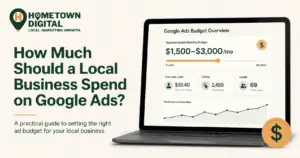
Most local businesses spend somewhere between a few hundred and a couple thousand dollars a month, depending on how many channels they run. A basic managed website might land under $100 a month, while a full local SEO, ads, and social program can run $1,000 or more. What matters more than the number is what’s included and whether you can see it clearly.
We’re upfront about ours. Our pricing starts at $295 to set up a website with $45/month for hosting and maintenance, and a la carte growth services start at $195/month. Whatever agency you choose, you should be able to get a real number before you get a sales pitch. Transparent pricing isn’t just convenient. It’s one of the clearest signals that an agency is comfortable being held to what it charges.
What choosing the right agency looks like in practice
Say you run a landscaping company and you’ve narrowed it to two agencies. Agency A guarantees page-one rankings in 90 days, won’t quote a price until a call, and wants a twelve-month contract signed first. Agency B shows you a flat monthly rate on its site, walks you through how it would handle your seasonal demand swings, and hands you the number of a current client to call.
Run both through the checklist and it isn’t close. Agency A trips three red flags before you’ve spent a dollar. Agency B answers the hard questions without being asked. The agency that talks in plain numbers and lets its current clients vouch for it is almost always the safer bet. This is the kind of straight-talking, full-channel local marketing we do at Hometown Digital, but the test works no matter who you end up hiring.
Common Questions About Choosing a Marketing Agency
How do I know if a marketing agency is legit?
Look for transparent pricing, real reviews, a portfolio of work you can verify, and a willingness to connect you with a current client. A legitimate agency will explain its process in plain language and won’t pressure you into a long contract before it has earned your trust. Guarantees of a number-one ranking are the fastest way to spot one that isn’t.
Should I hire a local marketing agency or a big national one?
For a local business, an agency that understands local search and your specific market usually beats a large national firm. Big agencies are built for big budgets and often assign small accounts to junior staff. A smaller team that specializes in local business tends to give you more attention and results that show up in real calls and bookings.
How long before a marketing agency shows results?
It depends on the channel. Paid ads can produce leads within days, while local SEO and organic growth usually take three to six months to build real momentum. Be cautious of anyone promising instant results from SEO. A good agency will set clear expectations for each channel up front instead of overpromising to win your business.
What is the biggest mistake local businesses make when hiring an agency?
The most common mistake is choosing on price alone and skipping the delivery questions. Research shows the top reason clients leave their agency is dissatisfaction with the work, not the cost. Ask how an agency reports results and whether you can talk to a current client before you sign, and you’ll avoid most of the bad fits.
Can I switch marketing agencies if it is not working?
Yes, as long as you own your website, domain, and accounts and you’re not locked into a long contract. This is exactly why ownership and contract length matter so much when you choose. Read the agreement before you sign so you know what leaving would actually involve, and keep your logins in your own name from the start.
Start by knowing where you stand
Before you hire anyone, it helps to know exactly what’s working and what isn’t on your own site and Google presence. That’s the honest starting point for any agency conversation, including one with us. Get a free website audit and we’ll review your site, your local search presence, and tell you what we’d fix first. No contract, no pressure, just a straight read on where you stand.