You have probably been told you need to be everywhere. Post on Facebook, post on Instagram, build a following, stay consistent. Meanwhile that email list sits ignored in a corner of your dashboard. Here is the part nobody tells you.
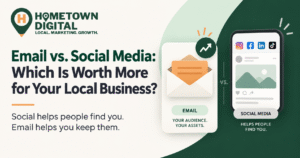
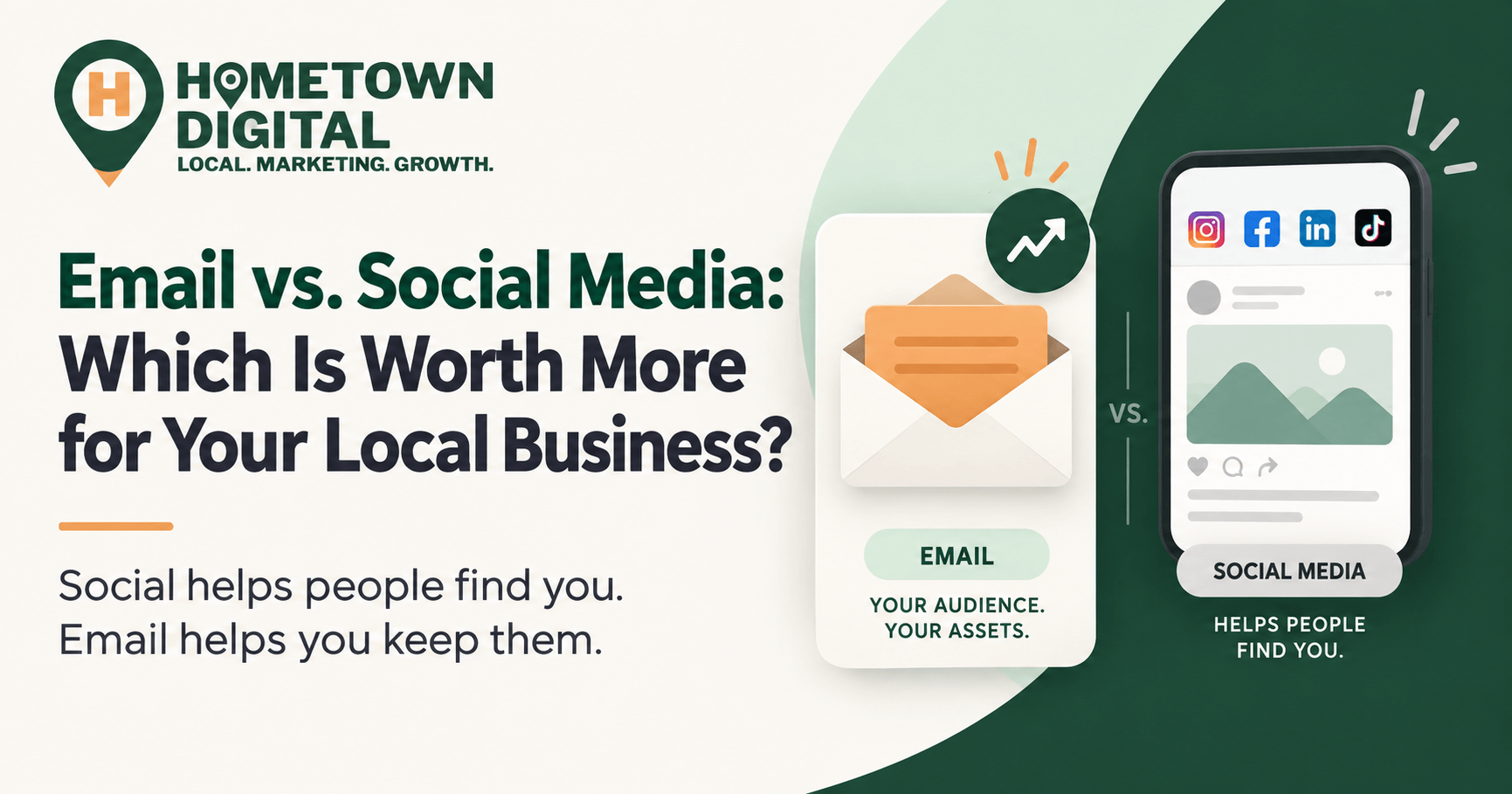
For most local businesses, email marketing is worth more than social media, dollar for dollar. Email returns an average of $36 for every $1 spent, higher than any other channel (Litmus), and it lands directly in the inbox instead of fighting an algorithm. Social media still matters for getting discovered, but it is a rented audience. Your email list is one you actually own. The smart move is not picking one. It is using social media to grow the list, then using email to turn those contacts into repeat customers.
Which is worth more, email or social media?
Email is worth more per dollar for most local businesses. It delivers a higher return, reaches a far larger share of your audience, and puts you in control instead of the platform. Social media wins on discovery and reaching new people who have never heard of you. But when it comes to turning attention into booked jobs and repeat customers, email does the heavier lifting.
Here is how the two stack up on the things that actually matter to a local business owner.
| Factor | Email Marketing | Social Media |
|---|---|---|
| Who owns the audience | You do. It is your list. | The platform does. You rent access. |
| Average return | About $36 per $1 spent (Litmus) | Uneven; depends heavily on paid spend |
| Who sees your message | Nearly everyone on your list | Roughly 1 to 2 percent of followers organically (Hootsuite) |
| Best at | Converting and keeping customers | Getting discovered and building familiarity |
| Cost to reach your people | Near zero after setup | Rising; you often pay to reach your own followers |
| Algorithm risk | Low. You control when you send. | High. Reach can drop overnight. |
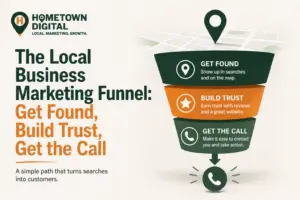
Neither channel is useless. They just do different jobs. Social media is how people find you. Email is how you keep them. If you want the full picture of how the two fit into the customer journey, we broke that down in our guide to the local business marketing funnel.
Why does email out-earn social media for local businesses?
Email out-earns social media because you own the audience and your message lands where people already look every day. According to Litmus, email marketing returns about $36 for every $1 spent, and for marketing and service businesses that figure climbs closer to $42. Social platforms, by contrast, decide who sees your posts, and they would rather you pay for the reach you used to get for free.
The difference comes down to one word: ownership. When someone follows you on Instagram, you do not own that connection. The platform does. It decides how many of your followers see any given post, and it can change that overnight. When someone joins your email list, you own that relationship. No algorithm sits between you and them.
And people want to hear from you there. Around 60 percent of consumers say they prefer email as their main way to hear from brands (Optimove). It is not intrusive the way a text is, and it does not disappear in a feed the way a post does. It waits in the inbox until they are ready to look.
Small business owners have caught on. Constant Contact found that 44 percent of small businesses expect email to be their most valuable marketing channel in 2026, and roughly 81 percent already rely on it as their primary way to win new customers (Omnisend). If you want to go deeper on setting it up the right way, our email marketing guide for local businesses walks through the whole thing.
What is social media actually good for, then?
Social media is best at the top of the funnel: getting discovered, showing your work, and building familiarity before someone needs you. Facebook and Instagram reach more than 3 billion people (Meta), and for a landscaper or a salon, a strong before-and-after photo can do what no email ever will. Social earns attention. It just is not where most of the buying happens.
This is where social genuinely shines for local businesses:
- Proof of work. Before-and-after shots, finished jobs, happy customers. Trades and beauty businesses especially live or die on visual proof.
- Discovery. People who would never have found you stumble across a post a friend shared or a local group recommended.
- Personality. Your feed shows the humans behind the business. That builds the trust that turns a stranger into a first-time customer.
So no, we are not telling you to quit social media. We are telling you not to mistake it for a system that reliably brings in booked work. It fills the top of the bucket. The problem is what happens next.
Why has organic social media gotten so much harder?
Organic reach has collapsed. Facebook average organic reach for business Pages has fallen to roughly 1 to 2 percent of followers in 2025, down from about 16 percent back in 2012 (Hootsuite). In plain terms, if you have 1,000 followers, a typical post might reach 15 to 20 of them. The rest never see it unless you pay.
That is not an accident or a bug. The platforms make their money selling ads, so they have steadily turned down the free reach and turned up the pressure to boost every post. You built the audience. Now you have to rent access to it. (You have probably noticed the little “Boost this post” button that pops up the second you hit publish. That is the whole business model in one click.)
Compare that to email. When you send to your list, it lands in the inbox. Not 2 percent of it, all of it, minus the normal deliverability losses. You are not bidding against every other business in town for a sliver of attention. That gap in reach is a big part of why the return on email is so much higher.
How should a local business use email and social media together?
Use social media to get discovered and email to close the loop. Post where your customers already scroll, then give them a reason to join your list. Once they are on it, email does the follow-up work that social cannot: reminders, review requests, win-back offers, and seasonal promotions that actually reach people. One channel finds customers. The other keeps them.
Here is the simple system we set up for local businesses:
- Use social to get in front of people. Post your work, join local groups, show up in the feed where your customers already spend time.
- Give them a reason to join your list. A first-visit discount, a seasonal maintenance checklist, or a spot on the schedule. The offer matters more than the ask.
- Let email do the follow-up. Welcome emails, appointment reminders, review requests, and win-back messages for customers who have gone quiet.
- Automate the repeat work. Set the reminders and follow-ups once, and they run in the background while you are on a job.
That last step is where the leverage is. In ecommerce, where this is measured closely, automated emails drove 30 percent of all email revenue from just 2 percent of the messages sent (Omnisend). The lesson carries over to any local business: a handful of well-timed automated emails, set up once, quietly keep earning while you focus on the actual work.
You do not need a complicated stack to start. If you want a plain-English list of what to have in place before you spend a dollar on ads, our small business marketing checklist covers the basics, and our guide to getting more customers on a small budget shows how the owned channels fit together when money is tight.
What does this look like for a real local business?
Picture a hair salon that has spent three years building 4,000 Instagram followers. The feed looks great. But when a slow week hits, posting a photo reaches maybe 60 or 70 people, and almost none of them book. There is no way to reach the other 3,900 without paying.
Now add an email list. The salon puts a simple sign-up at the front desk and offers 15 percent off the next visit for joining. Within a few months, it has 800 emails, every one of them a past client who already knows the work. A slow Tuesday turns into a “we have three openings Thursday, book now” email that goes to all 800 inboxes, not 2 percent of a feed. That is the difference between renting attention and owning it.
The social presence still did its job. It is what got those clients in the door the first time. But the list is what fills the chairs when it counts. Most of the local businesses we work with already have the social following. What they are missing is the owned channel that turns it into repeat revenue.
Common Questions About Email vs. Social Media for Local Businesses
Is email marketing better than social media for a small business?
For return on investment, yes. Email averages about $36 for every $1 spent (Litmus) and reaches nearly everyone on your list, while organic social reach has fallen to 1 to 2 percent of followers (Hootsuite). Social is better for getting discovered, but email is better for converting and keeping customers. Most local businesses need both, with email as the engine.
Should a local business quit social media and just do email?
No. Social media is still one of the best ways to get in front of people who have never heard of you, and for visual trades like salons, landscapers, and remodelers it is close to essential. The point is not to drop social. It is to stop treating it as your whole marketing system and start using it to feed an email list you actually own.
How much does email marketing cost for a small business?
Most small businesses can run email marketing for very little, often free to start. Platforms like Mailchimp, MailerLite, and Constant Contact offer free or low-cost plans for smaller lists. The main cost is the time to set it up well, which is why the return is so high. After setup, sending to your list costs close to nothing compared to paying to reach the same people on social.
How do I get people to sign up for my email list?
Give them a clear reason and make it easy. A first-visit discount, a useful checklist, a seasonal reminder, or a spot on the schedule all work. Put the sign-up where people already are: your website, your Google Business Profile, your social bio, and the front counter. The offer matters more than the ask. People trade their email for something they actually want.
How often should a local business send marketing emails?
Once or twice a month is a sensible starting point for most local businesses, plus automated emails triggered by an action like a first visit or a completed job. Consistency beats volume. It is better to send one useful email a month, every month, than to blast five in a week and then go quiet for a season. Watch your unsubscribe rate and adjust.
Ready to see where your marketing actually stands?
If you want a full picture of where your marketing stands, start with a free website audit. It is the fastest way to find out what is working, what is quietly costing you customers, and whether your business is leaning too hard on a rented audience instead of one you own. We will look at your site, your Google presence, and your channels, and tell you what we would fix first. This is the kind of email and social media work we do for local businesses at Hometown Digital every day.